Last April, I sat across from my doctor while she read through my blood work results with the kind of expression you never want to see — eyebrows pinched, head slightly tilted, like she was solving a puzzle that didn’t quite fit.
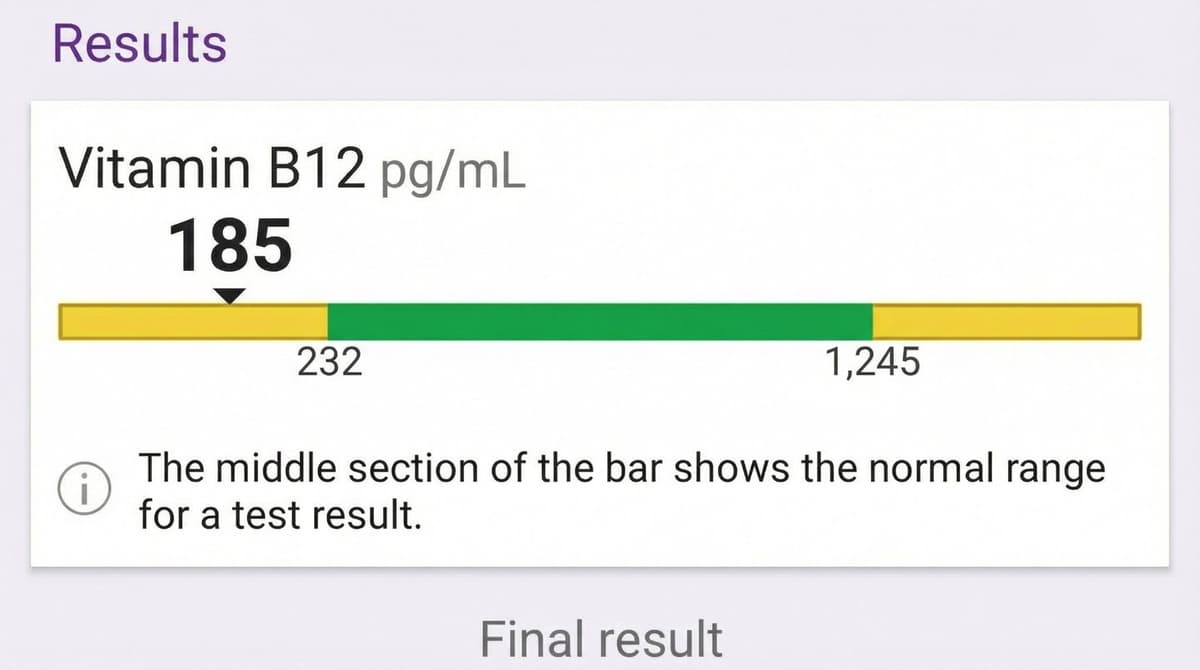
“Your B12 is low,” she said. “Iron is on the lower end. And your inflammatory markers are higher than I’d like.”
I was confused. I exercised four days a week. I didn’t eat fast food. I’d been eating a protein bar every single day for three years — one of the popular ones, the kind you see at every gym checkout and grocery store endcap. I had it on auto-ship. Thirty bars a month, delivered like clockwork. One between meals at the office, every day, without fail. I thought I was doing the right things.
But it wasn’t just the blood work. For months I’d been dealing with something I’d written off as stress — a persistent bloating after eating, low-grade stomach discomfort that would settle in about an hour after my afternoon bar and linger for the rest of the day. Some days it was mild. Other days I’d undo my belt a notch by 4 PM. I mentioned it to my doctor almost as an afterthought.
She asked me what I was eating day to day. When I mentioned the protein bar — every day, on auto-ship — she paused.
“Bring the wrapper next time,” she said. “Let’s look at what’s actually in it.”
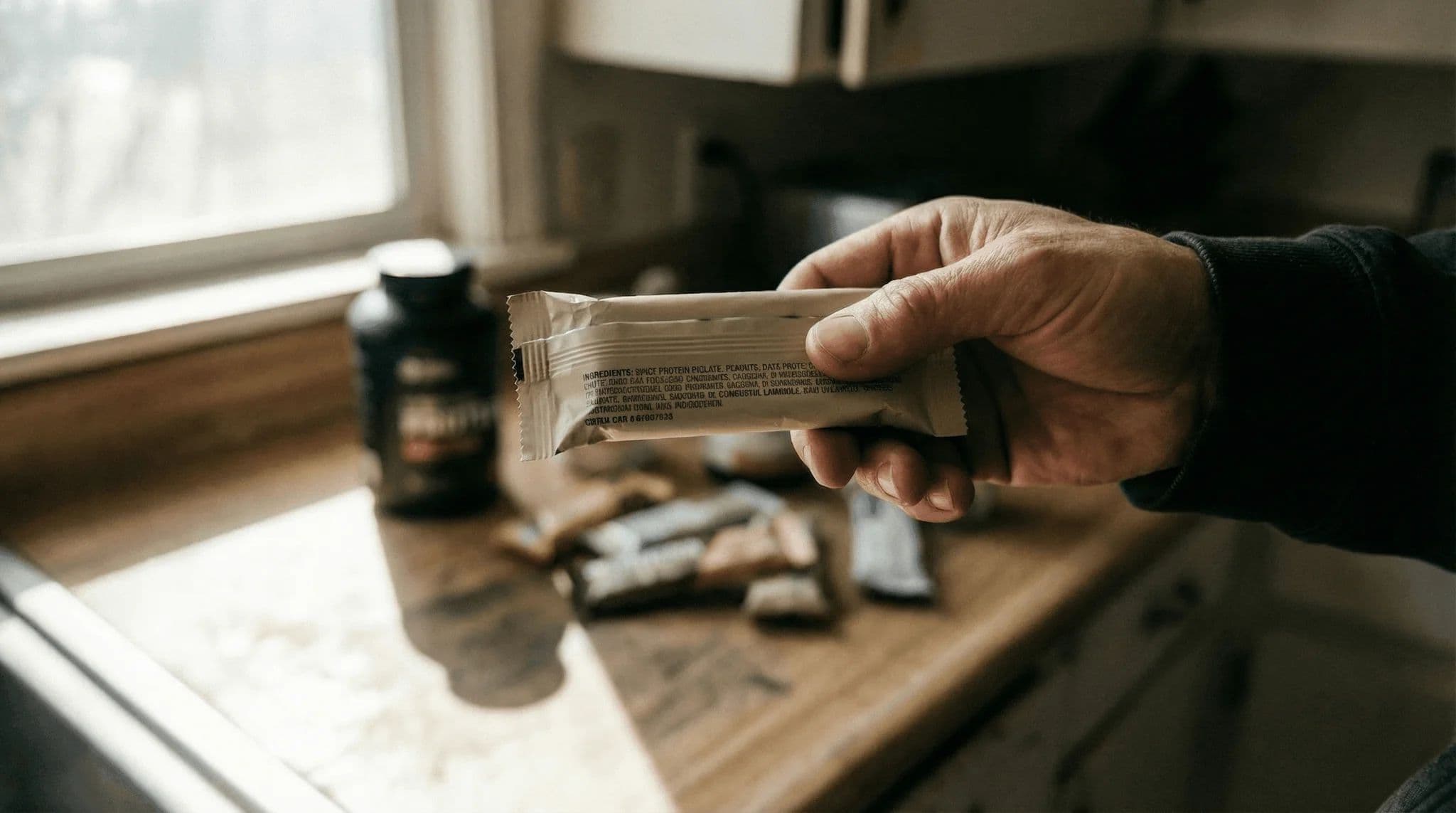
I didn’t wait for the next appointment. I went home, pulled a bar from the pantry, and flipped it over. What I found changed how I think about every piece of food that enters my body.
What’s Actually Inside Your Protein Bar
I’d read the front of this bar a thousand times. High protein. Low sugar. “Built for performance.” The front of the package was practically a health brochure.
The back told a different story.
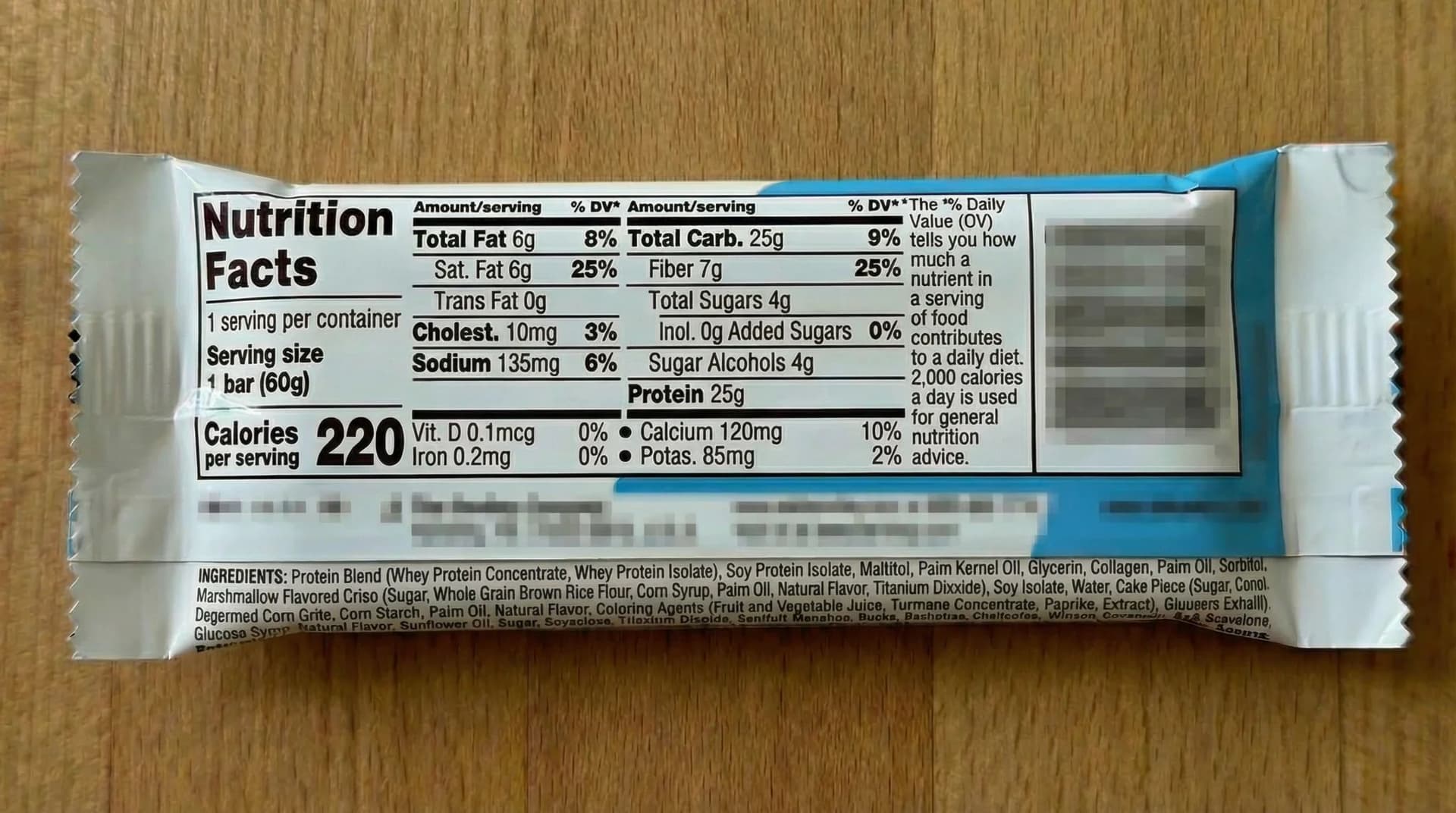
Soy protein isolate was the primary protein source. It’s cheap to produce and gives a high protein-per-serving number on the label, which is why manufacturers love it. But soy protein isolate is a heavily processed byproduct — chemically extracted using hexane solvents and stripped of most of the beneficial compounds found in whole soybeans. The protein number looks good on paper. What your body actually does with it is a different conversation.
Palm kernel oil and palm oil appeared multiple times in the ingredient list — not once, but in three separate places. Seed oils high in omega-6 fatty acids, which in excess promote systemic inflammation. The same inflammation my blood work had just flagged.
Maltitol and sorbitol — sugar alcohols. The label showed 4 grams per bar. That might sound minor until you do the math: I was eating one of these every single day. That’s 4 grams of sugar alcohols hitting my gut daily, 365 days a year.
Sugar alcohols are poorly absorbed in the small intestine. They pull water into the gut and ferment in the colon, producing gas, bloating, and cramping. The GI issues I’d been blaming on stress for months? I was literally eating the cause every afternoon at my desk.
“Natural flavors” and sucralose rounded out the list — a catch-all term that can include hundreds of undisclosed chemical compounds, and an artificial sweetener that research published in Nature found can disrupt gut microbiome balance in ways that worsen glucose metabolism.
And the nutrition panel itself? Iron: 0.2 milligrams. Zero percent of the daily value. B12 wasn’t even listed — it simply wasn’t in the bar at all. I had been relying on this product as a daily nutritional anchor for three years, and it contained functionally zero of the two nutrients my blood work had just flagged as deficient.
I cancelled the auto-ship that night and opened my laptop. I needed to understand why a product marketed as health food contained ingredients that were actively working against my health.
What the Industry Doesn’t Want on the Front of the Label
Soy protein isolate costs roughly a dollar a pound for manufacturers. It’s shelf-stable for years, mixes easily into bar formats, and delivers a high protein number on the nutrition panel. That’s the number that sells bars. Not how bioavailable the protein is. Not what micronutrients come with it. Not how your body metabolizes it.
The “25g of protein!” on the front of the package is marketing. What matters is the quality of that protein, what it comes packaged with, and what your body can actually absorb and use. You can eat 25 grams of protein and absorb 25 grams. Or you can eat 25 grams and absorb 15, while the other 10 pass through your system alongside a cocktail of seed oils and artificial sweeteners. The label doesn’t distinguish between those two outcomes.
But your blood work does.
Once I understood the ingredient quality problem, I started looking for alternatives. Not another brand of the same processed formula — a fundamentally different approach to protein.
That search led me somewhere I didn’t expect: beef liver.
Gram for gram, beef liver is the single most nutrient-dense food available to humans. This isn’t alternative health conjecture — it’s established nutritional science.
A 3-ounce serving of grass-fed beef liver delivers over 800% of your daily B12 and 600% of your daily vitamin A — as retinol, the form your body actually uses, not the beta-carotene it has to convert.
It’s one of the richest sources of heme iron on the planet — the form with the highest absorption rate. Plus folate, copper, riboflavin, and CoQ10.
No capsule. No powder. No synthetic blend. Just one food.
Every traditional culture on earth prized organ meats above muscle meat — modern nutrition science has confirmed why.
And yet almost nobody eats it. The taste is strong, the preparation is unfamiliar, and most people aren’t going to pan-fry liver and onions on a Tuesday night.
So I asked a question that felt almost too obvious: why isn’t anyone putting this into a convenient format? Why are we building protein bars out of processed soy and seed oils when the most nutritionally complete whole food on the planet is sitting right there?
Turns out, someone asked the same question.
“When you see 100% of your daily B12 on a protein bar label, most people assume that’s the same as getting B12 from food. It’s not. Most bars use cyanocobalamin — a synthetic form of B12 that your body has to convert through multiple steps before it can use. Beef liver contains methylcobalamin and adenosylcobalamin, the forms your body recognizes immediately. The absorption difference is significant.”
“The nutrition label treats all sources as equal. Your biology doesn’t.”
The World’s First Beef Liver Protein Bar
When I found Primal Power, it felt like the answer to the question I’d been asking for weeks.
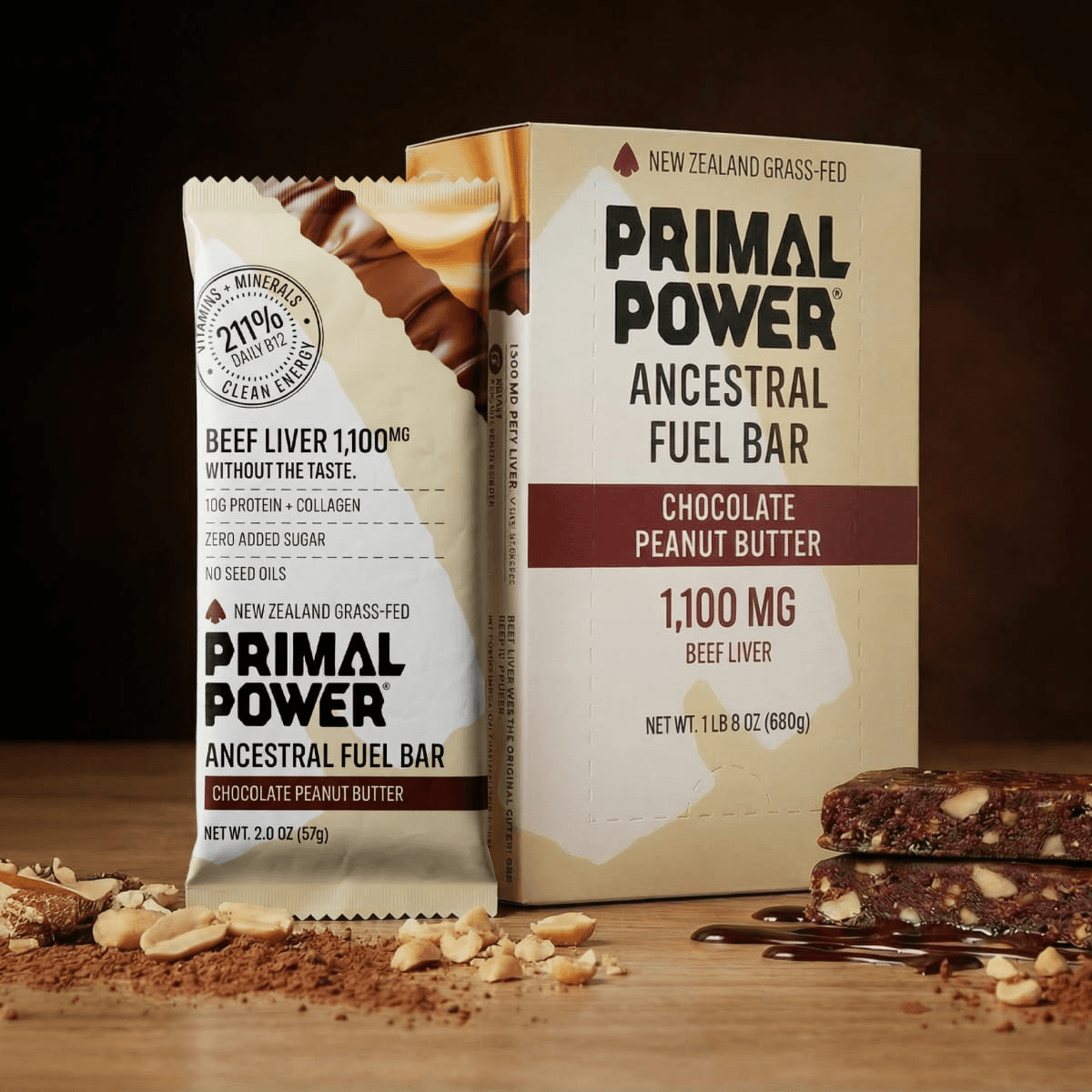
Primal Power is a protein bar made with grass-fed beef liver as its nutritional foundation. I picked one up and did the same thing I’d done with my old bar — flipped it over and read the label.
The contrast stopped me. Every ingredient was something I recognized. No soy protein isolate. No seed oils. No sucralose. No “natural flavors” hiding unnamed compounds. The protein came from whole-food animal sources. The micronutrients came along for the ride naturally — not sprayed on or synthetically added.
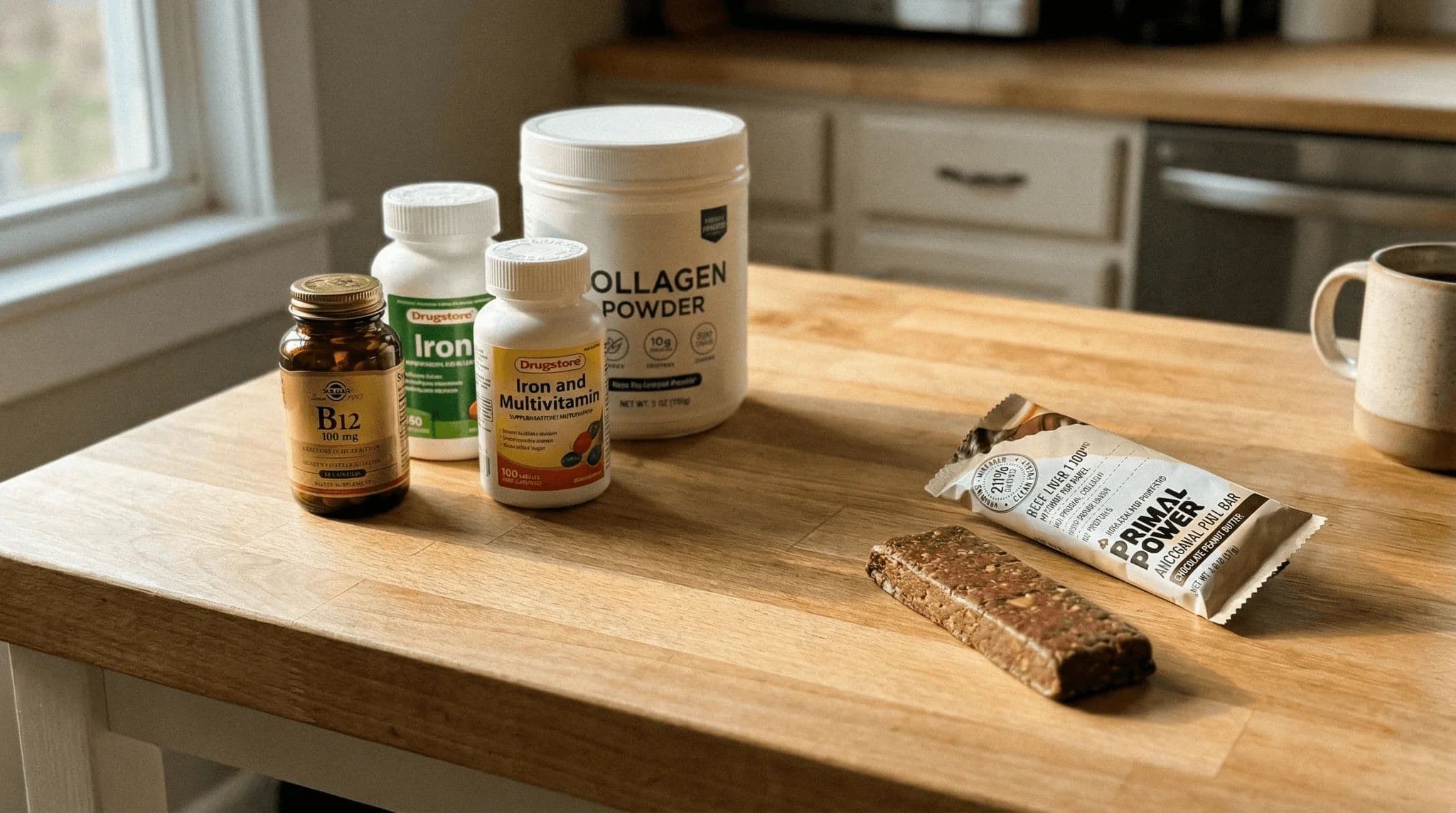
One bar delivered meaningful amounts of B12, heme iron, vitamin A, copper, folate, and CoQ10 — nutrients I’d previously been chasing across three separate supplement bottles. I did the math: my monthly supplement stack for those specific nutrients was running roughly $45–60. A daily Primal Power bar consolidated all of it into a single whole-food source.
But the real question wasn’t what was on the label. It was what would happen inside my body over time.
Typical Protein Bar
Soy protein isolate
Palm kernel oil / palm oil
Maltitol, sorbitol & sucralose
“Natural flavors”
Synthetic vitamin spray
Primal Power
New Zealand grass-fed, grass-finished beef liver (10g of protein + collagen)
No artificial sweeteners, no gums, no artificial ingredients, no natural flavors, no seed oils
Naturally occurring high levels of B12, iron, vitamin A
No synthetic ingredients
Gluten-free and dairy-free
The Part Everyone Asks About
Yes, I know what you’re thinking. Beef liver in a protein bar? What does that taste like?
I was skeptical too. I’d tasted liver once as a kid at my grandmother’s house and the memory wasn’t exactly pulling me back for more.
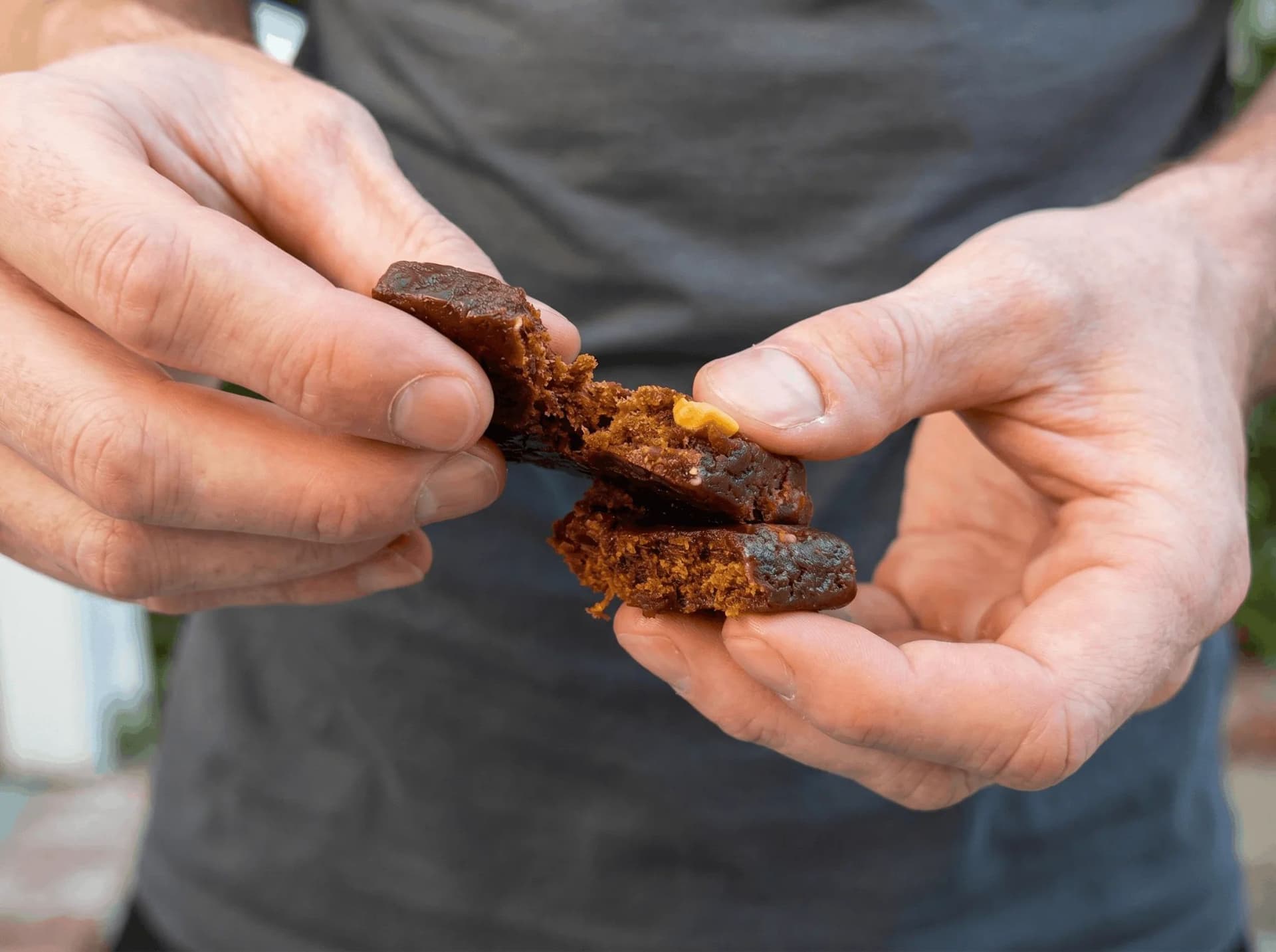
The bar doesn’t taste like liver. I want to be clear about that because it was my first concern and it’s probably yours. I tried the Chocolate Peanut Butter first — smooth, nutty, genuinely good. Then the Chocolate Almond Sea Salt, which tastes closer to a dark chocolate brownie than anything that should contain organ meat. And none of that chemical artificial sweetener aftertaste I’d become so accustomed to that I’d stopped noticing it. Once it was gone, I noticed.
I kept it simple. One bar after my workout, four days a week. Same slot in my routine where the old bar used to live. No other changes to my diet. No new supplements. I wanted to see what this one swap would do on its own.
The first thing I noticed — within the first week — was the gut issues disappeared.
Not gradually. Not “a little better.” Gone.
For three years I’d accepted daily bloating as background noise. That tightness in my gut an hour after eating my old bar, the puffiness that had me loosening my belt by mid-afternoon, the low-grade discomfort I’d chalked up to stress or age or just how my body worked now. When it vanished, I realized how constant and how bad it had actually been. The sugar alcohols — 4 grams a day, every day, for three years — had been quietly wrecking my gut, and I’d normalized it.
“I'm a CrossFit athlete and was taking 8 different supplements. This bar replaced all of them. Energy is consistent, recovery is better, and it actually tastes amazing.”
— Mike T., 46, CrossFit athlete
“I was skeptical that liver could actually taste good. After trying it, this became a staple in my routine. Tastes amazing, performs even better — it's now my go-to before every run.”
— Blake M., 51
The second thing took about a month. The afternoon fatigue I’d been masking with a second coffee started to lift. Not dramatically, not overnight — but the 2:30 PM wall that had been part of my daily rhythm for years started arriving later, then less intensely, then not at all.
In hindsight, this made sense. I’d gone from a bar with zero B12 and zero meaningful iron to one delivering 211% of my daily B12 from a whole-food source. My body was finally getting what it had been starving for.
My energy in the gym followed. Sets that had felt heavy at the end of a long day started feeling more manageable. Recovery between sessions improved. I was sleeping the same, eating the same, doing everything the same — except for the bar.
I didn’t attribute any of this to the bar at first. It wasn’t until I saw the blood work that the picture came together.
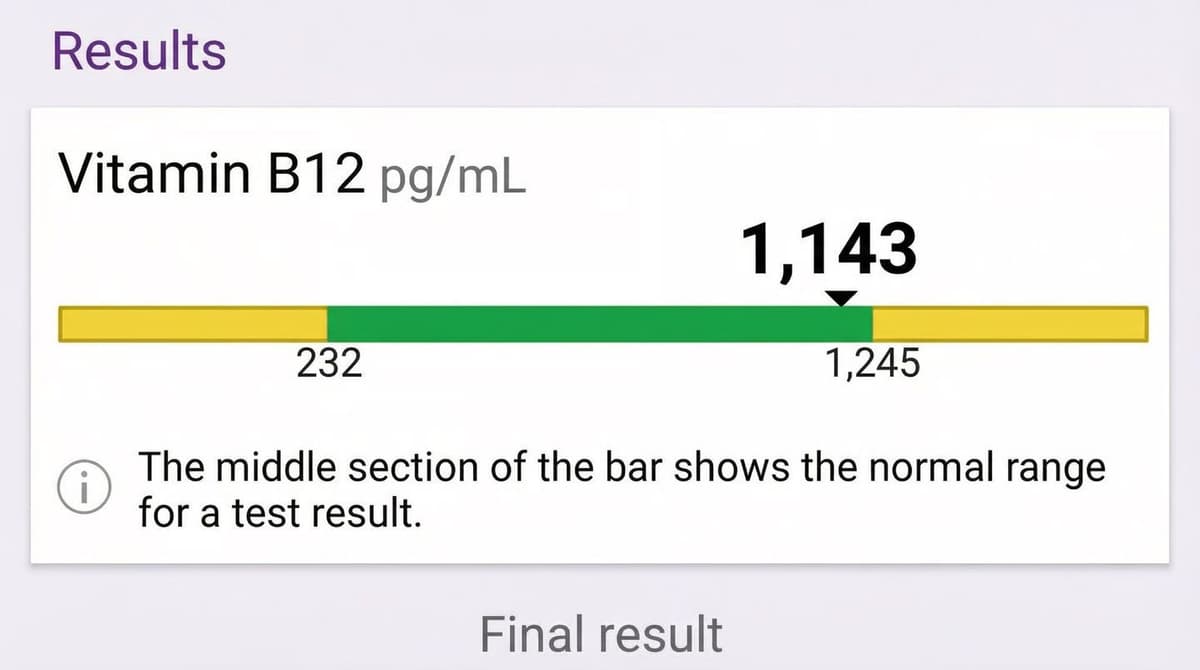
I went back for a follow-up in July. My doctor wanted to recheck the numbers she’d flagged in April — the low B12, the low iron, the elevated inflammatory markers. She’d also ordered a GI panel after I’d told her about the chronic bloating.
She pulled up the results side by side with my numbers from April. She looked at the screen, looked at me, and said something I wasn’t expecting.
“What changed?”
My B12 had spiked — not a gradual climb, a dramatic jump. Iron levels had normalized in a way she called significant. The inflammatory markers she’d flagged three months earlier had dropped. Across the board, the numbers hadn’t just moved in the right direction — they’d moved in a way she wasn’t used to seeing from a single dietary change in twelve weeks.
“Got my blood work done before and after switching. B12 went from borderline to optimal in 10 weeks. My doctor asked what supplement I started — I told her it was a protein bar.”
— David M., 53
April 2025 — Baseline
July 2025 — 3-Month Follow-Up
But it was the gut panel that surprised us both.
The Gut Results I Wasn’t Expecting
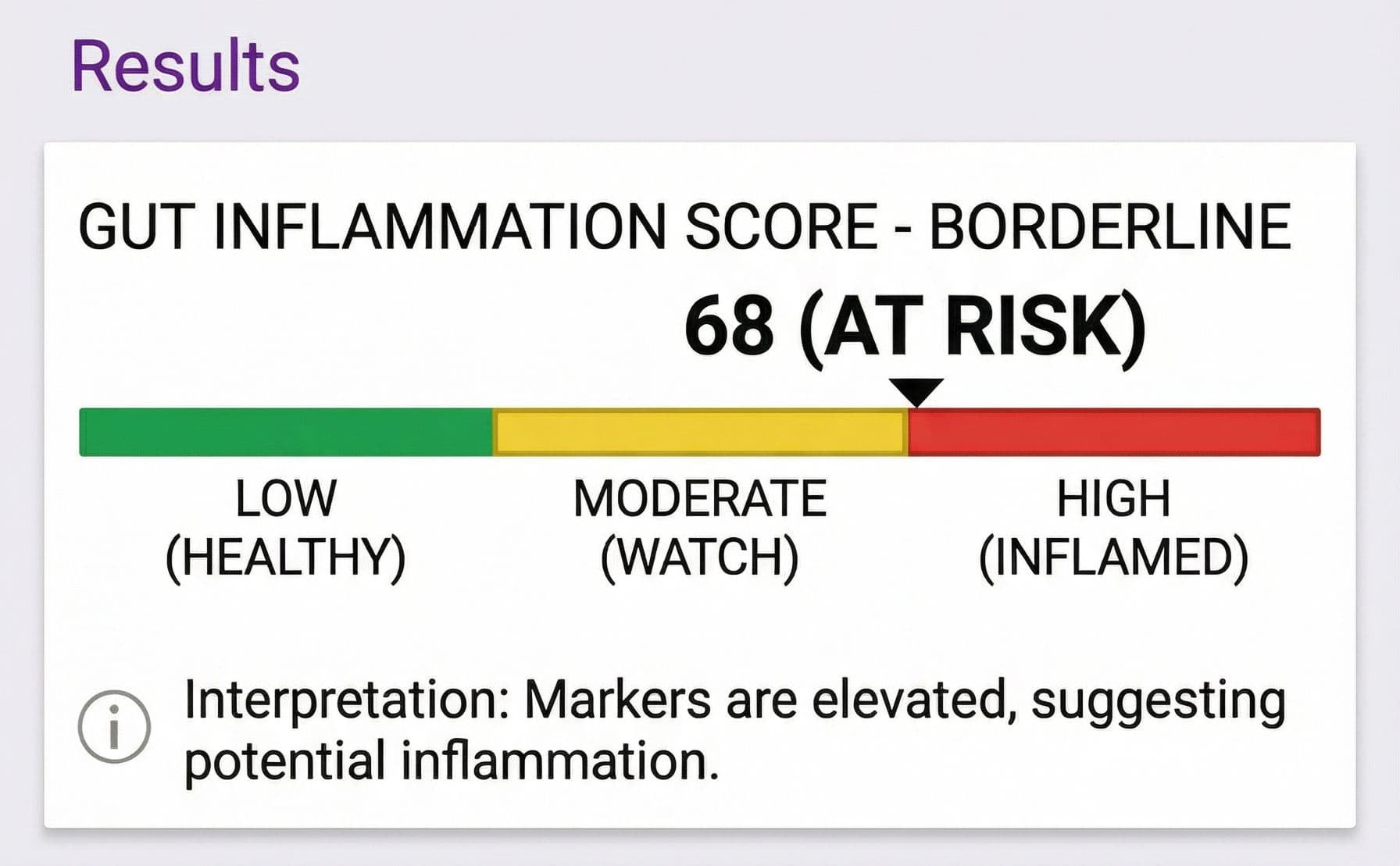
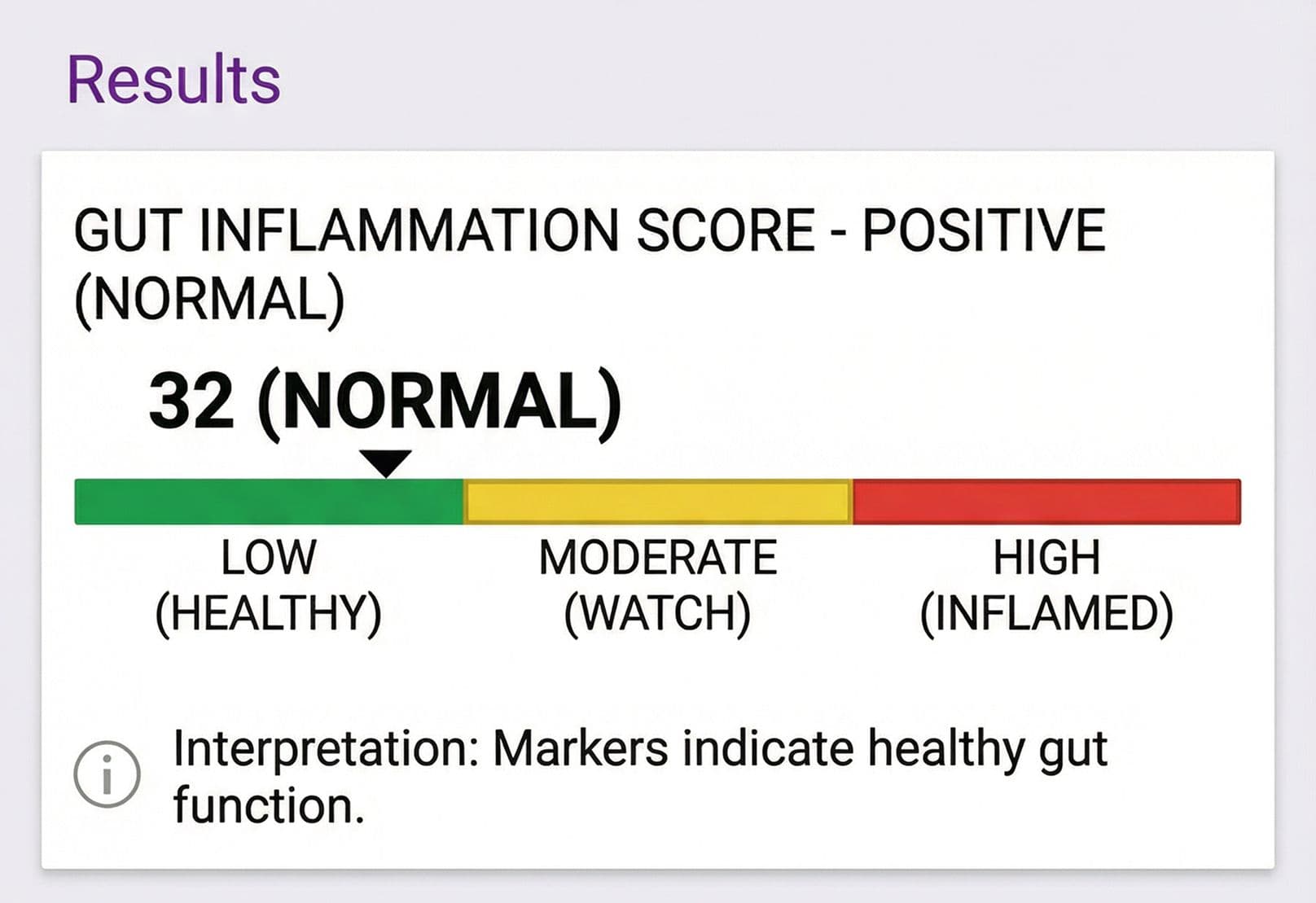
When my doctor ordered the follow-up blood work, she’d also run a GI panel to investigate the chronic bloating I’d been dealing with. I’d told her it had disappeared within the first week of switching bars, but she wanted to see what was actually happening internally.
The results confirmed what my body had already been telling me. The markers associated with gut inflammation had improved. The digestive distress indicators — elevated from three years of daily sugar alcohol consumption — had normalized.
She wasn’t surprised by the blood work improvement. Switching from a bar with zero B12 and zero meaningful iron to one delivering 211% daily B12 from a whole-food source — the math made sense. But the speed of the gut improvement caught her attention.
“Your gut lining recovers faster than most people realize once you remove the irritant,” she said. “You were eating the cause every day. Once you stopped, your body did what it does.”
Three years of daily bloating. Gone in a week. Confirmed by lab work in three months.
April 2025 — Baseline
July 2025 — 3-Month Follow-Up
I told her about the switch — that I’d swapped my processed protein bar for one made with New Zealand grass-fed beef liver, cut the separate supplement bottles, and changed nothing else.
She nodded slowly. “That tracks,” she said. “You went from synthetic, isolated nutrients and processed protein to whole-food bioavailable sources. Your body knows the difference even if the labels look similar.”
Individual results may vary. Changes in biomarkers can be influenced by many factors including diet, exercise, sleep, stress, and overall lifestyle. This article reflects one person’s experience and is not intended as medical advice. Consult your healthcare provider before making changes to your nutrition or supplement routine.
One Change
I didn’t overhaul my diet. I didn’t start a complicated supplement protocol. I didn’t hire a nutritionist or join a meal plan.
I read a label, understood what I was actually eating, and made a single swap.
If you’ve been eating the same protein bar for years without thinking about it, I’d encourage you to do one thing tonight: flip it over. Read the back. Look up the ingredients you don’t recognize.
And if what you find bothers you the way it bothered me — there’s a better bar waiting.
“Bought these for my husband after his physical came back with low B12. Now we both eat them. The Chocolate Almond Sea Salt tastes like a brownie — our kids keep stealing them.”
Try it risk-free. Don’t love it? Full refund. Keep the bars.
FDA & HEALTH DISCLAIMER
* These statements have not been evaluated by the Food and Drug Administration. This product is not intended to diagnose, treat, cure, or prevent any disease.
The information provided in this article is for informational and educational purposes only and is not intended as a substitute for advice from your physician or other qualified healthcare provider. You should not use this information to diagnose or treat a health problem or disease, or to prescribe any medication or other treatment. Always consult with a healthcare professional before starting any diet, exercise, or supplementation program, before taking any medication, or if you have or suspect you might have a health problem.
Individual results may vary. The testimonials and examples used are not intended to represent or guarantee that anyone will achieve the same or similar results. Each individual’s experience is unique, and your results will depend on a variety of factors including but not limited to your starting point, effort, diet, and personal health circumstances. The blood work results depicted in this article reflect one individual’s experience and should not be interpreted as typical results.
Nutritional information is based on the product’s nutritional label and publicly available USDA data for grass-fed beef liver. Comparisons to other products are based on publicly available nutritional panels.
Disclosure: This article contains sponsored content. Longevity Insider may receive compensation for purchases made through links in this article. The views and opinions expressed are based on the author’s personal experience and independent research. This content is not intended as medical advice. Individual results may vary.